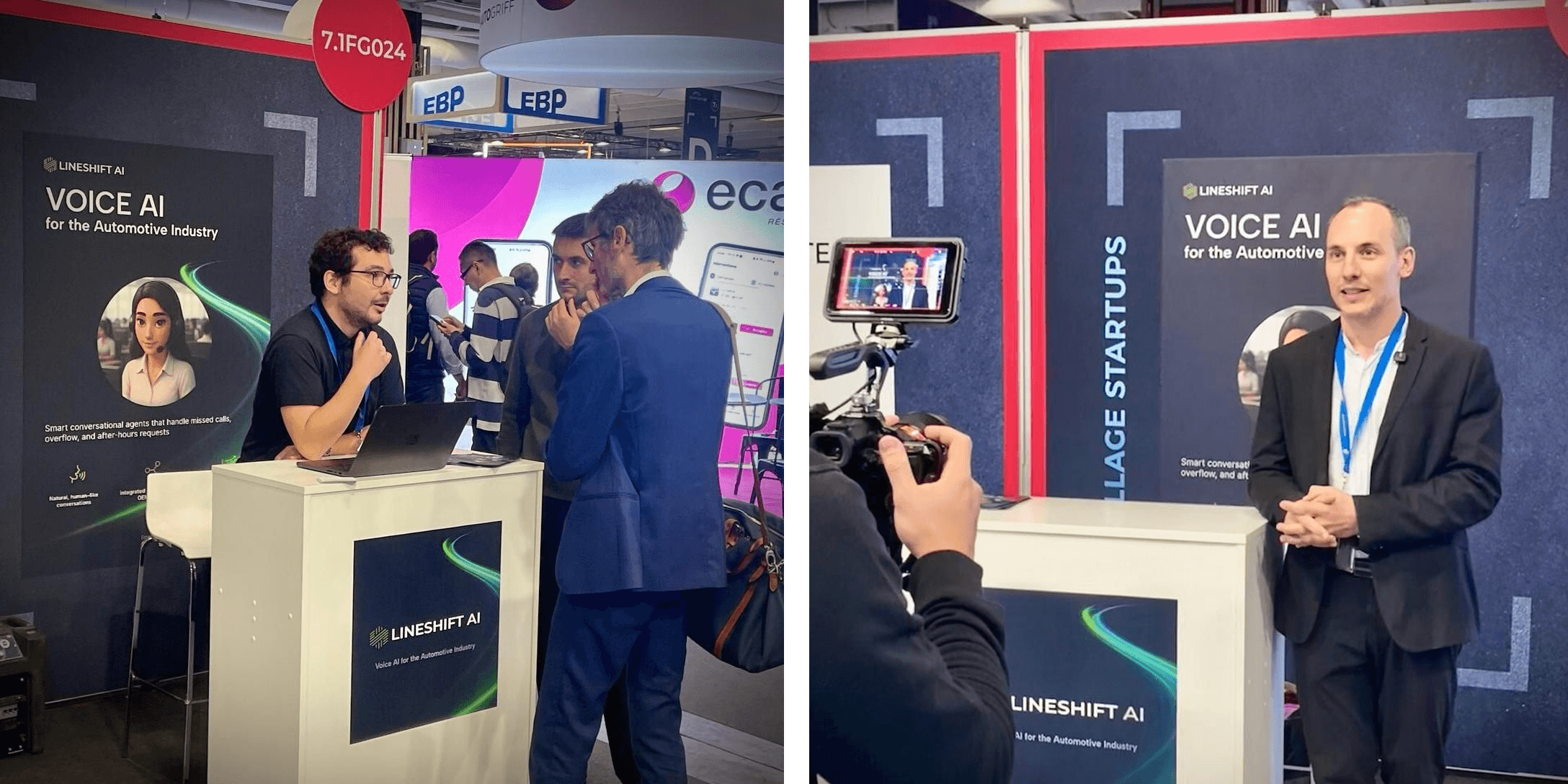
Key takeaways from the 2026 NADA Show in Las Vegas for dealerships

The 2026 edition of the NADA Show in Las Vegas (Feb. 3–6) was framed by organisers as the "world’s largest automotive retail conference and expo," and it drew "tens of thousands" of automotive retail professionals. The event ran on a new weekday schedule (Tuesday–Friday) and centred on a record-setting Expo count (628 exhibitors) alongside "more than 100 workshops and education sessions," plus dedicated on-floor learning areas (e.g., Dealer Learning Lab and the EV Solutions Center). (source)
For dealership leaders, the headline signal was a shift from "what’s possible" to "what pays" across technology, process, and staffing. Multiple sources described 2026 as a "back-to-basics" year, with margin pressure and volatile demand pushing dealers to prioritise controllable levers: fixed ops performance, F&I execution, used-vehicle speed-to-frontline, and hard-nosed operational discipline (including careful vendor selection and system integration). (source)
The operating model message: operational excellence beats "growth at any cost"
A consistent theme across coverage and agenda design was that dealership profitability in 2026 is expected to be won through operational improvements rather than relying on unusually strong front-end grosses. WardsAuto explicitly characterised 2026 as a "back-to-basics" year, with programming emphasis spanning fixed operations, F&I, and better leverage of used-car sales, reflecting a broader dealer focus on profitability through what management can directly control. (source)
The Exchange (peer-to-peer roundtables for dealers and managers) is a useful indicator of what NADA believes matters most "on the shop floor." The "hot topics" selected for 2026 included managing controllable expenses, building lifetime loyalty beyond the sale, unifying in-store and online experience, using AI effectively, and multiple fixed-ops and pre-owned themes (time-to-line and creative sourcing). This mix signals that the industry narrative is now about tightening execution across the full lifecycle: acquisition → sale → finance → service retention. (source)
Fixed operations was repeatedly positioned as the dependable profit anchor. WardsAuto, citing dealer- survey findings discussed at the show, reported that 85% of respondents expected parts and service to be the biggest driver of their business in 2026, reinforcing "fix the backend" as a strategic pillar rather than a departmental initiative. (source)
A closely related thread was reducing friction between silos (sales, service, back office). Show programming explicitly tackled that: for example, a workshop on unifying fixed and variable operations to "maximise profit" and reduce "money… left on the table" when teams operate independently. (source)
What this means in practice (as implied by the 2026 agenda mix): dealerships that treat cost, workflow, and customer retention as engineered systems—measured weekly or daily—are aligning with the operating assumptions that dominated NADA 2026. (source)
AI at NADA 2026: from experimentation to integrated execution
The clearest AI signal from the show was that "AI strategy" is now being discussed like an operating discipline, not a feature add-on. A flagship Live Stage session by Podium argued that the sector has moved past experimenting into an era where a well- planned approach is crucial—and, importantly, where implementation quality matters more than model hype. (source)
The same session is notable for two reasons that reflect broader market thinking (even if the exact percentages are claims from a vendor talk). First, it asserted that a meaningful portion of US dealerships are already using voice+workflow AI at scale (the presenter claimed 25% of US dealerships use its AI "employee"), and second, it emphasised that "bad AI" (scripted chatbots) is being replaced by systems meant to sustain real conversations through the whole customer lifecycle. The operational criteria highlighted—conversion, coverage (24/7), consistency, and customisation—effectively describe the new buying checklist dealers are applying to AI vendors. (source)
Where AI value was concentrated
Across the show coverage and session catalogue, "high ROI" AI clustered into five dealership workflows:
- Voice and messaging operations (sales + service): the "voice AI for service" framing (turn recommendations into revenue; consistent call communication) reflects a shift to treating inbound/ outbound communication as a measurable production line, not individual heroics. (source)
- Fixed ops marketing and retention: a dedicated workshop explicitly linked AI + customer data platforms (CDPs) to service revenue via one-to-one messaging, recall outreach, and integrated campaigns across paid and owned channels. (source)
- Inventory, appraisal, and acquisition decisions: show-floor reporting highlighted that dealers value "unified data" and real-time sharing to improve trade-in accuracy and inventory turns—implying AI is most valuable when it sits on top of connected systems and can influence pricing and acquisition speed. (source)
- Deal execution and risk reduction (back office + F&I support): coverage of AI at the show stressed assistive workflows to reduce rework, validate data earlier, and improve consistency across online-to- store transactions. (source)
- Reputation and "AI search" visibility: the exhibitor pitch competition winner,Das Technology, framed a new marketing battleground: dealers competing not only for classic SEO rankings but also for recommendations within AI-driven/generative search experiences—alongside tools to improve review performance and create search-friendly content. (source)
A notable emerging subtheme: "AI search optimisation" becomes dealership marketing ops
The pitch competition narrative is a strong proxy for where vendors believe dealership budgets are going next. DAS argued that consumers "increasingly use and trust AI… when shopping," and positioned "visibility in AI-driven and generative search" as the new scarcity. Whether or not one accepts all marketing claims, the strategic implication is real: dealership marketing teams are being pushed to manage structured inventory information, reputation signals, and content assets in ways that AI assistants can interpret and recommend. (source)
Data integration and vendor rationalisation: "too many tools" is now a recognised constraint
A recurring non-AI theme was that dealerships are saturated with point solutions and want coherence. One workshop title and description distilled the issue: dealers are "surrounded by tools but often starved for clarity," with "too much tech" creating confusion rather than confidence—hence the focus on eliminating waste and "unlocking the power of your own data" rather than remaining vendor-dependent. (source)
This aligns with dealer commentary at the J.D. Power Auto Summit held alongside the show: panelists stressed that technology adoption fails when it merely adds tools instead of integrating daily workflows and data across departments. The example given—disconnected systems sending ill-timed messages while a customer is waiting in service—illustrates why "integration" is now a customer experience requirement, not just an IT objective.
NADA’s own guidance on "working the Expo floor" framed vendor management like procurement discipline: plan with a map, prioritise a shortlist, book targeted demos, and treat meetings as performance reviews. While this is event advice, it mirrors how dealers are approaching technology spend in 2026: fewer vendors, clearer ROI, and stronger accountability for outcomes. (source)
A practical inference from these signals is that "platform consolidation" is becoming a competitive advantage: not because one vendor does everything best, but because fewer integration points typically mean fewer failure modes in lead handling, service scheduling, deal execution, and reporting. This inference is consistent with the show’s heavy emphasis on unified data and cross-department workflows. (source)
Cybersecurity, fraud, and compliance: risk management is a growth enabler
Cybersecurity was not treated as a purely technical sidebar at NADA 2026; it appeared explicitly as anoperational discipline. A dedicated workshop on dealership IT and cybersecurity signalled that peer best-practice discussions (dealership IT leaders and risk/compliance specialists) are now part of the mainstream education track rather than niche programming. (source)
The show-floor product narrative also connected fraud prevention directly to workflow efficiency and funding reliability. Coverage of Cox Automotive's NADA (source) launches and announcements focused heavily on identity verification, fraud mitigation, and integration into finance workflows—including claims that threats now include deepfakes and synthetic identities, and that fraud controls are increasingly "inextricably linked" to compliance practices. (source)
This matters for dealerships because modern fraud controls are shifting from manual "red flags" to embedded, automated checks inside deal and contracting processes. Even if one discounts the specific performance metrics quoted by vendors, the structural move is clear: underwriting and funding speed increasingly depend on data quality, identity proofing, and audit-ready processes. (source)
Regulatory pressure reinforces the point. In the US context, the FTC published Safeguards Rule FAQs specifically for automobile dealers, framing dealerships as financial institutions under the Gramm-Leach-Bliley Act and providing practical guidance for protecting customer information. This continues to push dealerships toward formalised security programmes, vendor oversight, and documented controls. (source)
Separately, the FTC’s "Vehicle Shopping Rule" (CARS Rule) remains a cultural force in US auto retail even after NADA reports it was vacated by the Fifth Circuit (meaning it has "no force or effect," per NADA’s summary). The takeaway is that regulators can still pursue similar conduct under existing authority, so the show’s emphasis on transparency and trust should be read as both a customer strategy and a compliance posture. (source)
Customer acquisition and trust: TikTok, transparency, and the service lane experience
A defining "customer journey" takeaway from the show was that decisions are happening earlier and in more social, video-native contexts than many dealer processes assume. A NADA show recap of a TikTok session positioned TikTok as a place where shoppers discover, compare, and decide "often before submitting a lead or visiting a showroom." The implication is that brand-building and inventory storytelling are becoming a first-touch acquisition channel, not a top-of- funnel experiment. (source)
Another thread: online-to-offline conversion remains structurally difficult, which is why "omnichannel" continues to dominate vendor messaging. Cox cited its own journey study to argue that 28% of shoppers say they want to buy online, but only 7% actually do—attributing the gap to incomplete or disjointed tools. Even if the exact percentages vary by segment, the directional insight is important: dealers are being pushed to remove handoff friction while maintaining compliance and the "personal touch."
Trust and transparency were repeatedly reinforced inside the profitability conversation as well, especially in finance and insurance. A Live Stage session recap from StoneEagle presented data suggesting total gross per vehicle has been trending downward since 2022, while F&I profit per vehicle retailed (PVR) rose 14% across 2025. It also emphasised that top performers simplified offerings, measured performance frequently (weekly/daily), and relied on clear, transparent conversations to make customers "more at ease."
Finally, fixed ops experience design—not only throughput—showed up in programming, particularly around video, communication, and consistency. Sessions focused on service video and quality standards framed video-based inspections as a trust lever that can unlock additional repair opportunities when executed well. (source)
EU vs US perspective: what NADA 2026 implies for European dealers
Although NADA is fundamentally a US franchised-dealer ecosystem event, the themes translate well toEurope—especially because 2026–2027 is a pivot window for EU tech regulation and for evolving OEM–retailer power dynamics.Market structure and OEM control: franchise resilience vs agency pressureNADA show narratives emphasised advocacy, policy engagement, and the franchised retail model as a coreoperating assumption (a point repeated in show recaps encouraging dealer involvement with electedofficials). (source)
In Europe, the balance of power is more fluid: Reuters reported that Stellantis paused a plan to overhaul dealer structures via an "agency model" across Europe after dealer resistance, continuing only in a limited set of pilot countries. This is a concrete illustration of the EU reality: more OEM experiments with pricing and contract control, more variation country-to-country, and more uncertainty for dealer margin structures—conditions that increase
the value of fixed ops excellence and retention (exactly the "back-to-basics" levers NADA highlighted). (source)
EU competition policy also frames the distribution environment differently. The European Commission press release on prolonging the Motor Vehicle Block Exemption Regulation to 2028 reflects continued regulatory attention to how vertical agreements work in the motor vehicle sector, shaping how OEMs, dealers, and aftersales players compete. (source)
AI regulation and governance: the EU timeline makes mid-2026 a hard deadline
For European dealers (and any dealer group operating in the EU), AI adoption in 2026 needs to be mapped onto the EU AI Act’s phased implementation schedule. The European Commission’s AI Act timeline states that: - prohibitions and AI literacy requirements applied from 2 Feb 2025, - general-purpose AI model obligations applied from 2 Aug 2025, and - a large portion of the AI Act starts applying and enforcement begins from 2 Aug 2026 (including transparency rules). (source)
That means the NADA 2026 message—"implementation determines success," treat AI as an operational programme, and prioritise training/customisation—aligns unusually well with European compliance reality: AI literacy and governance are not optional cultural add-ons; they are explicitly time-bound expectations. (source)
Data protection and cross-border data flows: EU constraints change vendor due diligence
European dealers also face materially different data protection constraints than many US peers, especially around lawful basis, transparency, and customer rights for personal data processing under GDPR. The European Commission’s GDPR explainers lay out core principles and rights, and its sanctions page reiterates the maximum fine level (up to €20m or 4% of worldwide annual turnover). (source)
When EU dealers procure AI tools (voice recordings, lead scoring, behavioural personalisation, call analytics), the compliance surface is larger: consent and transparency expectations, profiling concerns, and cross-border transfer risk all need a formal assessment before scale deployment. (source)
Cross-border transfer mechanisms are also more prominent. The US Department of Commerce describes the EU–US Data Privacy Framework as a mechanism for transfers to certified US organisations, and Reuters reported that the EU’s General Court upheld the framework against a legal challenge in September 2025. This combination suggests that, for now, EU dealer groups can make pragmatic use of certified vendors— but should still treat transfer architecture as a board-level dependency because these frameworks have historically been litigated. (source)
Vehicle data access and aftersales opportunity: the EU Data Act is a structural change
A specifically European angle that intersects with NADA’s fixed-ops focus is the EU Data Act. The European Commission states it applies from 12 Sept 2025, and its explainer frames it as part of the EU’s data strategy. (source)
For dealers and dealer-adjacent service providers, the strategic point is this: as data access rights mature, customer-authorised sharing of connected-vehicle data can expand what aftersales providers can do (predictive maintenance, proactive service reminders, usage-based offers)—but it also raises governance questions (who is the "user," what data is shared, and under what security constraints). In other words, Europe’s regulatory trajectory may increase the upside of "service lane AI," while simultaneously increasing the compliance bar for how it’s implemented. (source)
The practical translation: EU dealers can use NADA 2026 as a blueprint with different guardrails
If you reframe NADA 2026’s takeaways through an EU lens, three priorities stand out: First, treat AI like governance + operations, not software. The show’s emphasis on training, customisation, and lifecycle integration matches what EU AI literacy and transparency expectations push organisations to do anyway. (source)
Second, use integration as a trust and profitability tool. NADA programming and show-floor commentary repeatedly pointed to unified data and cross-department workflows as the difference between "more tech" and "better outcomes," which is even more critical in Europe where OEM control and margin pressure can be higher in some markets. (source)
Third, elevate security and compliance from "risk" to "enablement." US dealerships are being pushed by Safeguards Rule expectations; EU dealerships are pushed by GDPR and upcoming AI Act enforcement. In both regions, the dealers who can prove control (identity, access, audit trails, vendor management) are better positioned to deploy automation without future disruption. (source)