
Voice AI for Used-Car Sales: How to Choose the Right Agent
Updated

A shopper calls about a used SUV they found online. They want to know whether it is still available, whether their trade-in could work, and whether they can see it tomorrow. Your salesperson is already with a customer. What happens next determines whether that inquiry becomes a useful conversation or another callback on a crowded list.
The right voice AI agent for used-car sales should identify the exact vehicle, answer from approved information, arrange a realistic next step, and keep a salesperson accountable for anything unresolved. A natural voice helps. Reliable execution is what makes the system worth evaluating.
Why used-car inquiries need vehicle-specific answers
Used inventory creates a particular challenge: two vehicles with the same model name can differ in mileage, trim, condition, history, and warranty coverage. A model brochure cannot answer whether one specific car has completed reconditioning or is ready for a test drive.
Buyers may also be flexible about their starting point. In Cox Automotive’s 2025 US Car Buyer Journey Study, only 26% of used-vehicle buyers knew the exact car they wanted at the start of shopping. The online survey included 770 used buyers. That supports asking what matters to the shopper before offering alternatives; it does not establish an AI sales uplift.
A useful agent can handle both situations: a buyer asking about stock number U4821 and someone seeking a practical SUV under a stated budget.
What the agent should do during a sales call
Check the specific car before making promises
Ask vendors to demonstrate how their agent matches a caller’s description to a stock number or VIN. Which system supplies availability? How recently was it updated? Does “in stock” mean advertised, physically present, or ready to drive?
If the information is missing or conflicting, the agent should say what needs checking and assign the question to someone. It should never infer accident history, certification, or warranty terms from the model name. A sold vehicle should trigger an honest explanation and, with the buyer’s agreement, a search for suitable alternatives.
Qualify the buyer without creating an interrogation
Capture the details that change the next action: vehicle of interest, budget range, purchase timing, trade-in interest, and preferred contact method. Answer the customer’s immediate question before working through extra qualification.
Financing interest is useful context for the sales team. It is not permission to promise approval, invent a monthly payment, or give an unsupported trade-in valuation. Those conversations need approved information and the appropriate person.
Confirm a test drive only when it is genuinely bookable
A calendar opening alone does not establish that a test drive can happen. The vehicle may be off-site, awaiting preparation, or already committed to another appointment.
Require the agent to check the configured vehicle and staffing constraints before confirming. If those checks cannot be completed, record a test-drive request with an owner and a confirmation deadline. The customer should understand whether they have a confirmed appointment or are waiting for a callback.
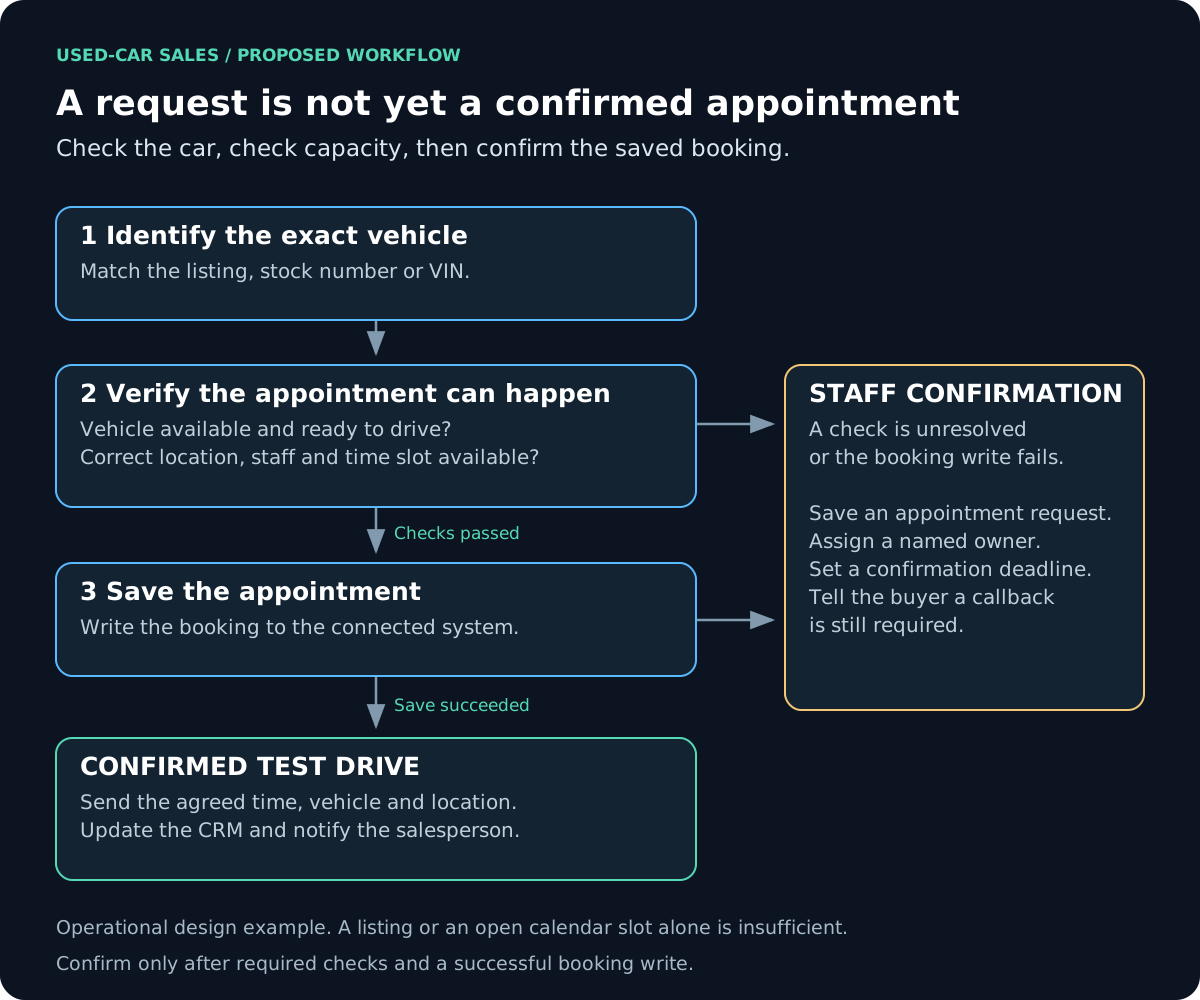
Illustration: A proposed booking workflow. Confirmation depends on successful checks and a saved appointment; unresolved requests remain assigned to staff.
Leave a record a salesperson can act on
The handoff should contain the vehicle identifier, answered questions, unresolved concerns, agreed next step, and responsible person. Check that this information reaches the existing CRM record without creating a duplicate lead.
A summary such as “interested in SUV” leaves too much work undone. “Interested in U4821, wants service-history clarification before visiting Saturday, callback assigned to Alex” tells the next person how to continue.
Judge the handoff as carefully as the conversation
Pied Piper’s 2026 US Internet Lead Effectiveness study evaluated 3,290 dealership websites and tracked responses over 24 hours. It reported that dealers answered 78% of typical web inquiries within that period, versus 51% for complex questions requiring human engagement.
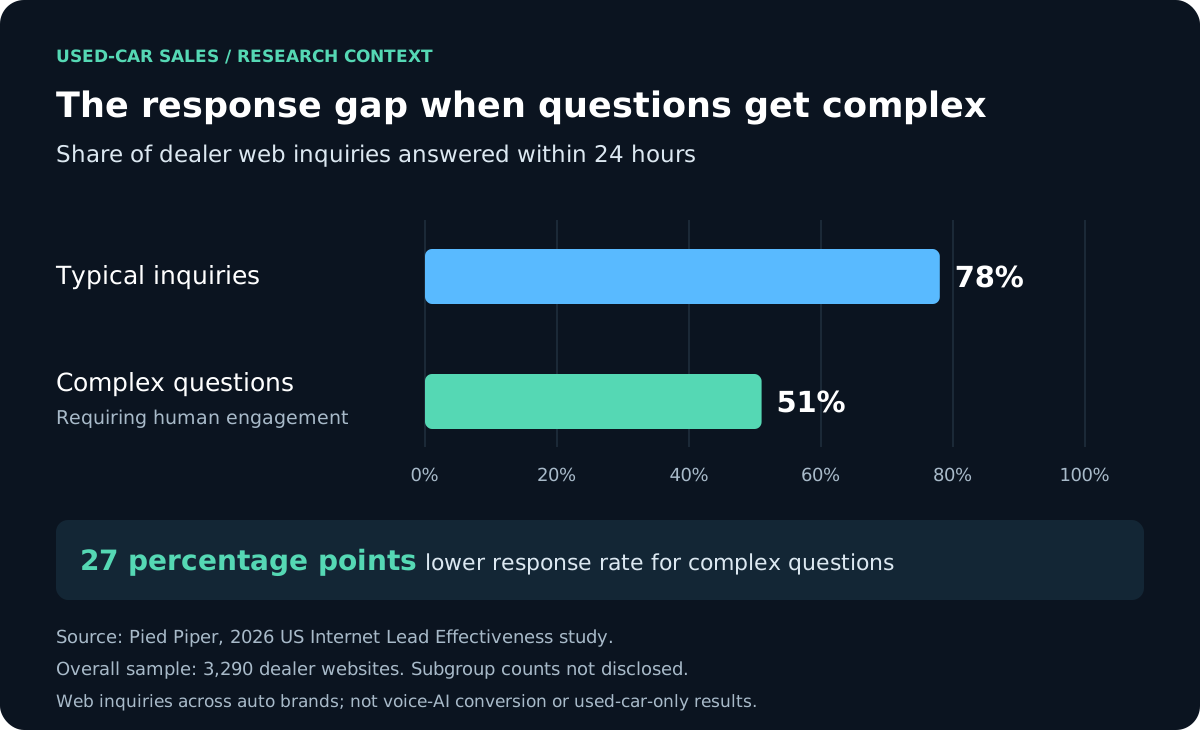
Source: Pied Piper, 2026 US Internet Lead Effectiveness study. Overall sample: 3,290 dealership websites; subgroup counts are not disclosed in the release. These are web-inquiry response rates, not voice-AI conversion rates or used-car-only results. Read the study.
For a used-car manager, the practical implication is to test what happens when automation reaches its limit. Can it transfer the caller with context? If nobody answers, who owns the callback? Does that person receive an alert, and can a manager see overdue work?
A successful transfer attempt and a resolved customer question are different outcomes. Your reporting should distinguish them.
Five scenarios to bring to a vendor demo
Use the same scenarios for every provider, with your own inventory and operating rules. Ask to inspect the resulting records as well as listen to the call.
- The advertised car has just sold: Does the agent use the updated status, avoid a false promise, and offer relevant alternatives with permission?
- Two similar cars are in stock: Does it identify the right vehicle before discussing price or equipment?
- The buyer asks about accident history: Can it give an approved vehicle-specific answer or assign a follow-up?
- A Saturday test drive cannot be verified: Does it log a clearly labeled request with an owner and confirmation deadline?
- The salesperson does not answer the transfer: Is there a callback task with context and visible ownership?
Also interrupt the agent, change the requested vehicle halfway through, and call about an existing appointment. These reveal whether it follows the conversation and updates the correct record.
Measure sales outcomes, not just activity
Start with a defined pilot, such as overflow and after-hours used-car inquiries. Agree on eligible leads, deduplication rules, attribution, and a follow-up window before launch. Where practical, compare similar lead groups during the same period; a simple before-and-after comparison can be distorted by pricing, inventory, advertising, and staffing changes.
Track the progression from unique eligible leads to meaningful conversations, confirmed appointments, attended visits, and completed sales. Keep appointment requests separate from confirmed bookings, and record cancellations and duplicates. Review unresolved questions and inaccurate answers alongside conversion figures.
For example, if 200 eligible leads produce 40 confirmed appointments and 24 attended visits, the appointment rate is 20% and attendance among booked appointments is 60%. These are illustrative numbers, not a benchmark. More bookings only create value if enough customers attend and the resulting business covers the added cost.
Include software, telephony, setup, and staff follow-through in that cost. Assess additional contribution after incremental costs, rather than treating every AI-assisted sale as a sale that would otherwise have been lost.
Where Lineshift fits
Lineshift’s automotive voice AI supports sales qualification, test-drive booking, CRM updates, outbound follow-ups, and routing to staff. Its Human + AI approach describes how automated conversations and human intervention work together.
For used-car sales, the implementation question is how those capabilities connect to your specific inventory, appointment rules, and team. Confirm the available data fields, update frequency, booking permissions, and escalation behavior in the demonstration. Product capabilities alone do not prove an increase in sold units.
If you are evaluating outbound follow-up, also define contact permissions, allowed calling times, retry limits, and how opt-outs stop further contact before activating the workflow.
Bring one available car, one recently sold car, and one difficult buyer question to a custom Lineshift demo. Follow each conversation through to the CRM record and assigned next action. That gives you a concrete basis for choosing an agent and deciding what a pilot must prove.