AI Lead Follow-Up for Car Dealerships: From Inquiry to Test Drive
Updated

A shopper submits a vehicle inquiry on Saturday evening. They want to know whether the SUV is available and whether they can test-drive it tomorrow. An automated acknowledgment arrives immediately. The question remains unanswered.
For a dealership's business development center (BDC), that gap matters. A lead can appear “contacted” in the CRM even though nobody has helped the buyer take the next step.
AI lead follow-up connects an inquiry to a useful conversation and a recorded outcome. It can answer approved vehicle questions, gather buying requirements, arrange a visit, and bring in a salesperson. Its value depends on the information it can verify and the actions it can actually complete.
What dealership lead-response research tells us
Pied Piper's 2026 Internet Lead Effectiveness study evaluated 3,290 US dealership websites, submitting vehicle inquiries during business hours and measuring responses over 24 hours. Dealers answered questions by text in 54% of evaluations, compared with 38% in 2025. Answering by email or text and also making a phone call rose from 49% to 62%.
These are response behaviors, not sales conversion rates or proof of an AI-driven uplift. They suggest a useful operating standard: answer the question and give the customer a practical way to continue.
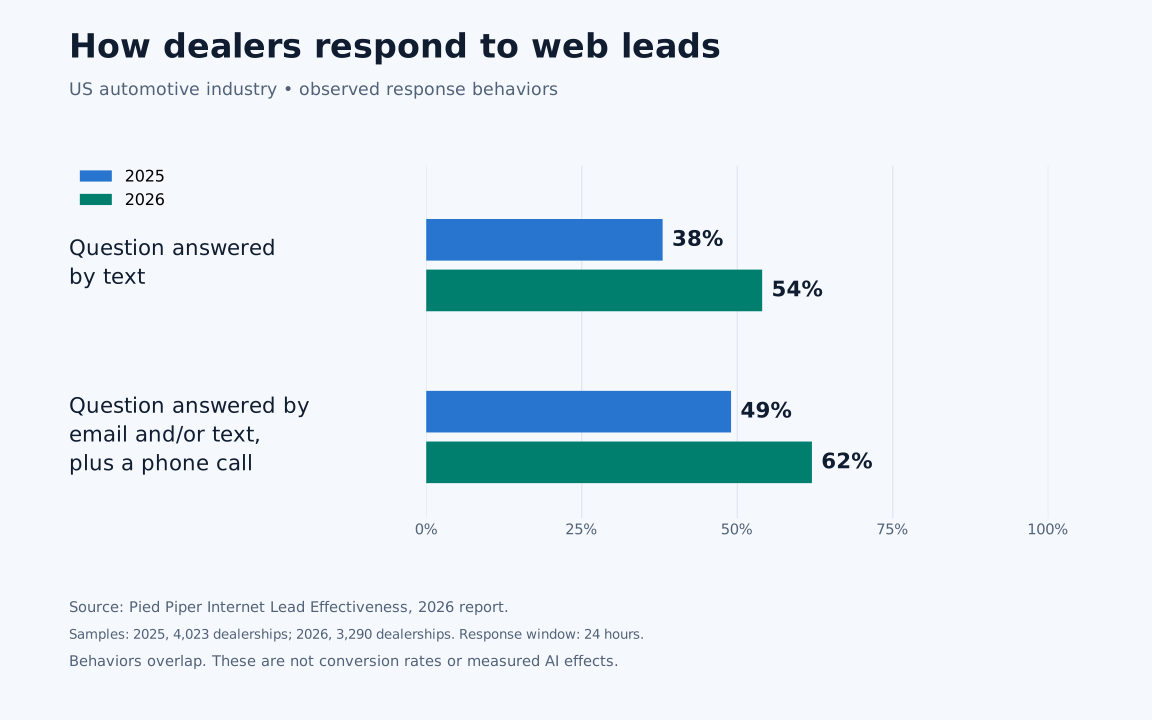
Source: Pied Piper, 2026 Internet Lead Effectiveness study. US automotive industry figures; percentages represent separate, overlapping behaviors, not shares of a whole.
How AI automotive lead follow-up works
Consider an illustrative buyer interested in a used SUV under $30,000, with a trade-in and availability on Sunday afternoon. A useful workflow carries that context from the original inquiry to the sales team.
1. Start with the lead and its original question
A website form, advertising lead, chat conversation, or missed-call record can initiate follow-up when connected to the workflow. Capture the source, vehicle identifier, location, timestamp, original question, and permitted contact channels.
Match the inquiry to existing CRM records before creating another opportunity. If the buyer already has an appointment or an active conversation with a salesperson, route the new information there. Two automated calls from different campaigns can make a coordinated dealership look disorganized.
2. Make the first response relevant
The opening should acknowledge the vehicle and the buyer's request. On an eligible outbound call, the agent can identify the dealership, introduce itself as a virtual assistant, and ask whether it is a good time to talk.
After-hours coverage needs channel rules. Receiving a form late at night should not automatically trigger a phone call. Use the customer's requested timing, recorded permissions, local time, and campaign restrictions to determine whether to call, send an allowed written response, or queue a callback.
3. Qualify through conversation
Answer the initial question before moving into qualification. Then collect only the details needed for the next step: preferred vehicle, budget range, purchase timing, trade-in interest, and preferred dealership.
A buyer who already selected a model should not have to repeat that choice. Someone asking about financing can be offered a conversation with the appropriate employee. The agent should not infer creditworthiness or promise an approval from a brief exchange.
4. Check inventory before making a commitment
Availability should come from the connected inventory source, with a clear policy for stale or missing data. If the SUV has sold, ask whether the buyer wants alternatives that match their stated needs.
If availability cannot be verified, record the uncertainty and assign a check to sales. A confident answer based on an outdated listing can create a wasted visit. The same boundary applies to discounts, trade-in valuations, and vehicle reservations.
5. Book the visit and write back the outcome
Check the correct location, salesperson or test-drive capacity, and calendar before offering a slot. Treat a booking as confirmed only after the scheduling system accepts it. Otherwise, record an appointment request awaiting confirmation.
The CRM update should include what the customer asked, what was verified, the agreed next action, and its owner. For our example, that might be a confirmed Sunday test drive, a trade-in appraisal request, and a note that financing questions still need a salesperson.
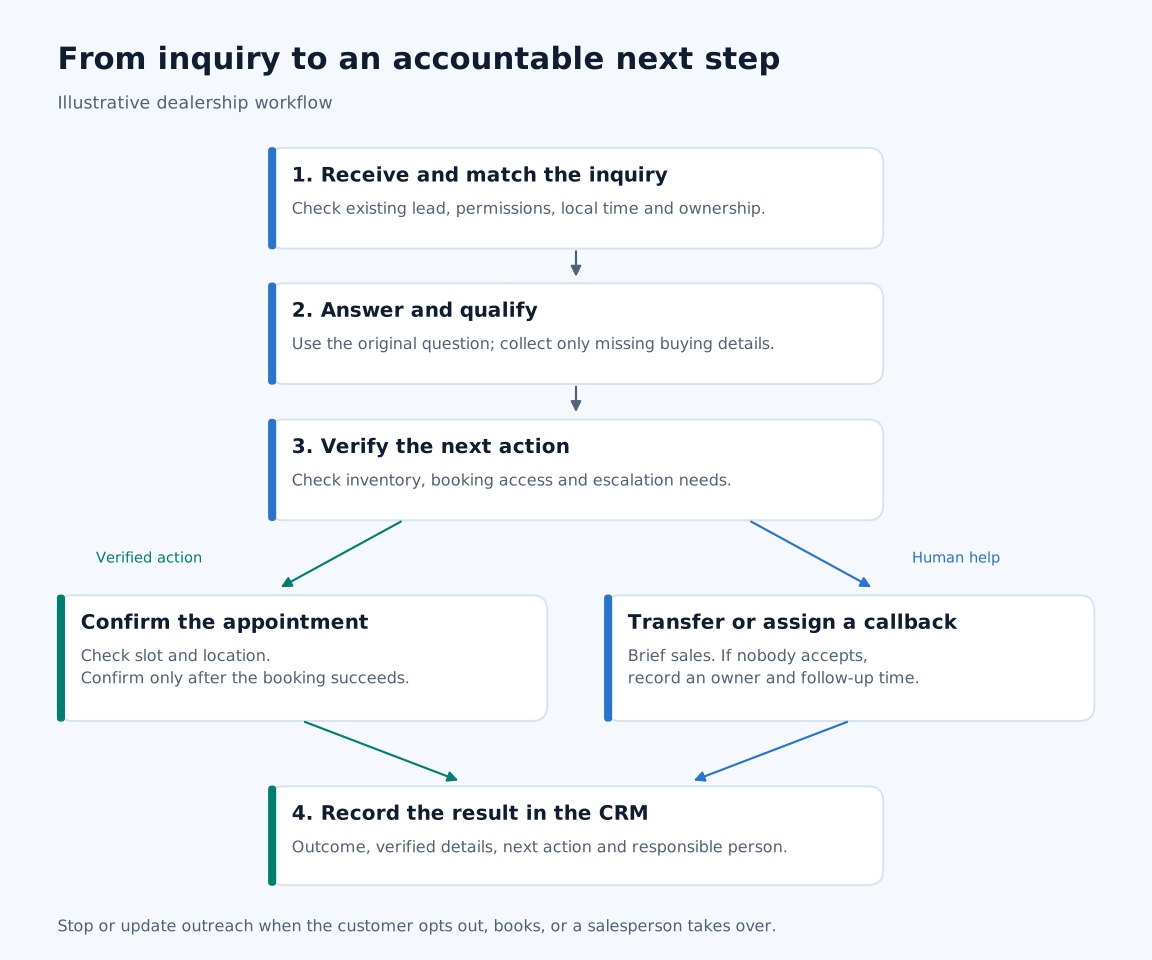
Illustrative workflow. Booking requires a successful calendar write; an unresolved request needs an owner and follow-up time.
Where the BDC and sales team take over
Negotiation, unusual financing requests, complaints, and questions outside approved vehicle information need a defined human path. The buyer should also be able to ask for a person directly.
During staffed hours, a warm transfer can brief the salesperson before connecting them. If nobody accepts, keep the conversation alive long enough to agree on a callback. An escalation needs an owner, a due time, and visibility when it remains unhandled.
That boundary deserves testing. In the same Pied Piper study, inquiries requiring human help were twice as likely to receive no personal response. Automation still needs someone responsible for the exceptions.
Lineshift supports outbound calls, lead qualification, booking workflows, and CRM integration, with scope depending on the deployment. Its Human + AI approach includes contextual transfers, fallback handling, and structured follow-up tasks. Inventory access and scheduling permissions should be validated for each dealership's systems.
Follow up with a reason, and know when to stop
Automated lead nurturing should respond to the customer's situation. A requested callback, a verified matching vehicle, or an appointment reminder gives the next contact a purpose.
If the buyer does not answer, use a bounded retry policy across approved channels. Pause automation when a salesperson takes ownership. Stop or update the sequence when the customer opts out, buys elsewhere, books a visit, or says their plans have changed.
Prioritization can remain transparent: a requested test drive, an imminent purchase date, or an unresolved question can trigger attention. Keep those signals visible to the BDC instead of presenting an unexplained “hot lead” score.
Measure progress beyond calls made
A fast first attempt is useful, but it does not prove that a buyer was reached or a visit happened. Track the full sequence with consistent definitions:
- First response time: Measure from receipt of the lead to a substantive response; report attempted calls separately.
- Contact rate: Unique leads with a two-way exchange divided by eligible leads.
- Appointment rate: Unique leads with a confirmed sales appointment divided by eligible leads.
- Show rate: Attended appointments divided by confirmed appointments due to occur.
- Sales conversion: Leads resulting in a sale within a stated window divided by eligible leads.
Compare equivalent lead sources and operating periods. Keep duplicates, opt-outs, failed integrations, and unaccepted handoffs visible. More appointments with a lower show rate may indicate that the agent is agreeing to visits without establishing real intent.
Start with one complete journey
Choose one dealership, one lead source, and one clearly defined outcome, such as a confirmed test drive or an assigned sales callback. Test a sold vehicle, a duplicate inquiry, an unavailable calendar, an unanswered transfer, and an opt-out before expanding.
For a custom Lineshift demo, bring that workflow and its exceptions. The useful test is whether a real buyer's question reaches a verified answer and an accountable next step.